Adeno-Associated Virus: proven in vivo tropism, hard payload limit
AAV has strong hepatic tropism (AAV8, AAV-LK03), an established regulatory framework, and approved products. Its ~4.7 kb payload limit is a genuine constraint for base editors and large CRISPR components.
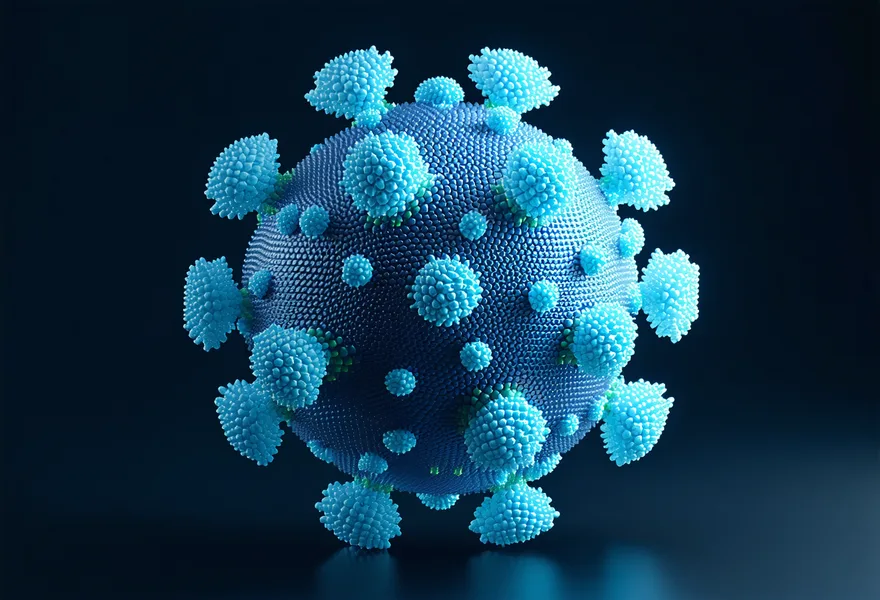
What makes AAV work — and what limits it
Icosahedral capsid
25 nm protein shell with T=1 icosahedral symmetry. 60 VP1/VP2/VP3 protomers. Surface loops determine receptor binding specificity and serotype organ tropism.
ssDNA genome
~4.7 kb single-stranded DNA genome flanked by inverted terminal repeats (ITRs). Effective packaging limit ~4.5 kb. SpCas9 alone is ~4.2 kb — leaves ~300 bp for promoter and polyA.
Pre-existing immunity
Majority of the human population has pre-existing anti-AAV neutralizing antibodies (NAbs) from natural infection. NAb-positive patients require either de-targeting or serotype switching. Re-dosing is limited by anti-AAV IgG generated after first administration.
Clinically relevant AAV serotypes
| Serotype | Primary tropism | Hepatic efficiency | Clinical programs |
|---|---|---|---|
| AAV8 | Liver, muscle | High | Hemophilia A/B, metabolic liver disease |
| AAV-LK03 | Liver (human-specific) | Very high | Hemophilia A (Roctavian precursor) |
| AAV2 | Eye, liver, CNS | Moderate | Leber's (Luxturna) |
| AAV9 | CNS, muscle, heart | Low | SMA (Zolgensma) |
| AAV5 | Liver, CNS | Moderate | Hemophilia B (Beqvez) |
AAV or LNP for your hepatic editing program?
If your CRISPR component exceeds 4.5 kb, requires re-dosing, or targets a high-NAb prevalence population, LNP is likely the better choice. We'll help you evaluate the tradeoff.